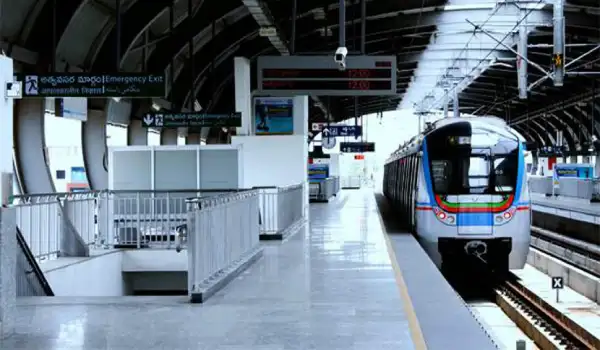
Hyderabad Metro Station

hyderabad-metro-station

The Hyderabad Metro Station network is a transformative symbol of urban mobility, revolutionizing how the city commutes every day. As the third-largest metro network in India, after Delhi and Bengaluru, it exemplifies efficiency, sustainability, and technological innovation. Built on the DBFOT (Design, Build, Finance, Operate, Transfer) model, the Hyderabad Metro Rail is also recognized as the world’s largest elevated metro system under this framework—a remarkable milestone in India’s infrastructure development.

🏙️ Evolution and History of Hyderabad Metro

The vision for the Hyderabad Metro Station network began in 2003, introduced by the Government of India to tackle increasing road congestion and public transport challenges. Designed to integrate seamlessly with the city’s existing transit system, including MMTS and RTC services, the project was developed to ensure convenience for millions of daily commuters.

The first operational stretch of Hyderabad Metro Phase 1 was inaugurated on 29 November 2017, marking the start of a new era in rapid urban transit. By 2020, the entire Phase I Hyderabad Metro route map became functional, spanning key commercial and residential zones. Today, this network not only connects major employment hubs but also promotes sustainable, eco-friendly commuting for the city’s growing population.

🚇 Hyderabad Metro Route Map and Network Overview

The Hyderabad Metro route currently covers a total length of 72 km, distributed across three major corridors that connect nearly every strategic part of the city:

  • Red Line (LB Nagar – Miyapur): 29 km with 27 stations
  • Green Line (JBS – Falaknuma): 15 km with 15 stations
  • Blue Line (Nagole – Raidurg): 28 km with 24 stations

Interchange stations such as Ameerpet, Mahatma Gandhi Bus Station (MGBS), and Parade Grounds ensure commuters can shift seamlessly between corridors. The complete Hyderabad Metro station list is available on the official website and Hyderabad Metro app, which helps passengers check routes, calculate fares, and plan journeys easily.

🚧 Hyderabad Metro Phase 2 Expansion Plan 2025

The Hyderabad Metro Phase 2 expansion aims to extend connectivity by 67.5 km, with an estimated investment of ₹17,150 crore. The new network will connect emerging real estate zones, IT corridors, and the airport corridor. Key proposed routes include:

  • Raidurg to Kokapet Neopolis – 11.6 km
  • Miyapur to Patancheruvu – 13.4 km
  • LB Nagar to Hayathnagar – 7.1 km
  • MGBS to Chandrayangutta – 7.5 km
  • Nagole to RGIA (Airport Metro Corridor) – 36.6 km

Once operational, this extension will directly link the Hyderabad Metro to Rajiv Gandhi International Airport (RGIA), transforming how residents travel between the city’s commercial heart and the airport. The expansion will also strengthen property demand near Hyderabad Metro Phase 2 routes, benefiting homebuyers and investors.

Hyderabad Metro Stations – Facilities and Commuter Amenities

Every Hyderabad Metro Station is thoughtfully designed with advanced infrastructure and commuter-friendly amenities. Passengers can expect:

🚶‍♀️ Escalators and elevators ensuring easy accessibility

📢 Bilingual and multilingual announcements in English, Telugu, Hindi, and Urdu

📺 Real-time electronic display boards showing live train updates

🦮 Tactile pathways and Braille-enabled elevator buttons for visually impaired passengers

🚗 Service roads, parking spaces, and wheelchair-accessible areas for better mobility

The network’s energy-efficient metro stations and automatic fare collection systems ensure a smooth, safe, and inclusive journey for everyone.

🕓 Hyderabad Metro Timings, Fares, and Ticket Options

The Hyderabad Metro timings operate from 6:00 AM to 11:00 PM, ensuring reliable service for early office commuters and late travelers alike.

        Hyderabad Metro fare chart:

  • Minimum fare: ₹10 (0–2 km)
  • Maximum fare: ₹60 (beyond 26 km)

Fares are calculated at an average of ₹2.30 per km, making it one of India’s most affordable urban transport systems. Passengers can book tickets at counters, vending machines, or through the Hyderabad Metro Rail app, which also supports smart card recharge and mobile ticketing.

For regular travelers, the Hyderabad Metro daily commuter pass and student discount card options offer cost-effective travel solutions.

📞 Hyderabad Metro Contact and Helpline Information

For any assistance, commuters can reach the Hyderabad Metro Rail customer care number at 040-2333-2555 or visit the Customer Care Center available at every major metro station.
The official Hyderabad Metro app also provides instant updates on train timings, fare calculations, and lost and found services.

🌆 Hyderabad Metro’s Impact on Real Estate and Urban Growth

Expanding Hyderabad Metro connectivity to major IT hubs has transformed the city’s real estate landscape, boosting both accessibility and property demand. Residential and commercial property values have appreciated significantly near metro corridors due to shorter commute times and better accessibility.

For instance, Prestige Spring Heights in Rajendra Nagar offers easy access to the Falaknuma Metro Station on the Green Line, while Prestige Kollur near Blue Line’s Raidurg–Kokapet stretch is emerging as one of West Hyderabad’s prime investment destinations. Developers now strategically plan projects near metro routes, making flats near Hyderabad Metro stations among the most sought-after housing options in the city.

🚉 Conclusion

The Hyderabad Metro Station network is more than a public transport system — it’s a vital lifeline fueling the city’s growth and modernization. With its expanding Hyderabad Metro route map 2025, improved accessibility, and integration with smart city initiatives, it has become a benchmark for sustainable and inclusive urban development in India.

As Phase 2 of Hyderabad Metro Rail moves forward, commuters can look forward to faster travel, cleaner mobility, and enhanced quality of life, solidifying Hyderabad’s reputation as one of India’s most progressive metropolitan cities.